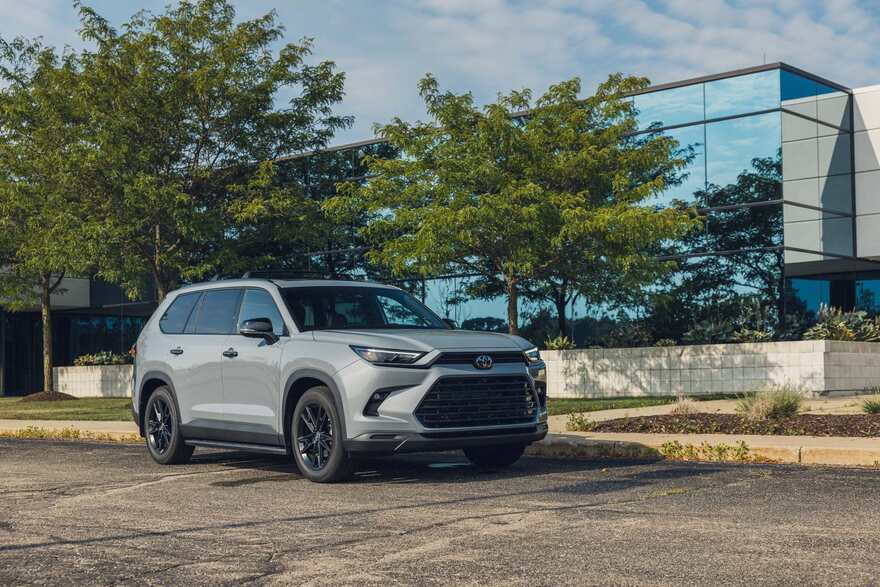
No Van? No Problem!
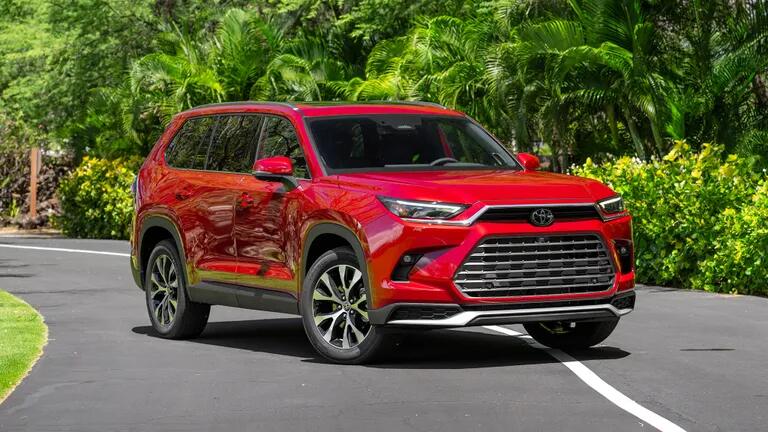
The Grand Highlander Hybrid Platinum in Ruby Flare Pearl.
Let me tell you about the most common conversation on my showroom floor. A family walks in. Three kids, maybe a dog waiting in the car, grandma visits twice a year. On paper, the correct answer is a minivan — and everyone knows it. And then someone says the quiet part out loud. I've had guests tell me, word for word, that they would rather die than be seen driving a minivan. Dramatic? Extremely. Do I understand? Completely. So consider this article the loophole: everything a minivan does for your family, wrapped in an SUV your ego can live with. No van? No problem.
This is the complete Grand Highlander buyer's guide — all three engines, every trim, the packages, the colors, and my honest matchmaking on which one belongs in your driveway. It's long on purpose. Read it with a coffee, and by the end you'll know exactly what to ask me for.
Why Toyota built it
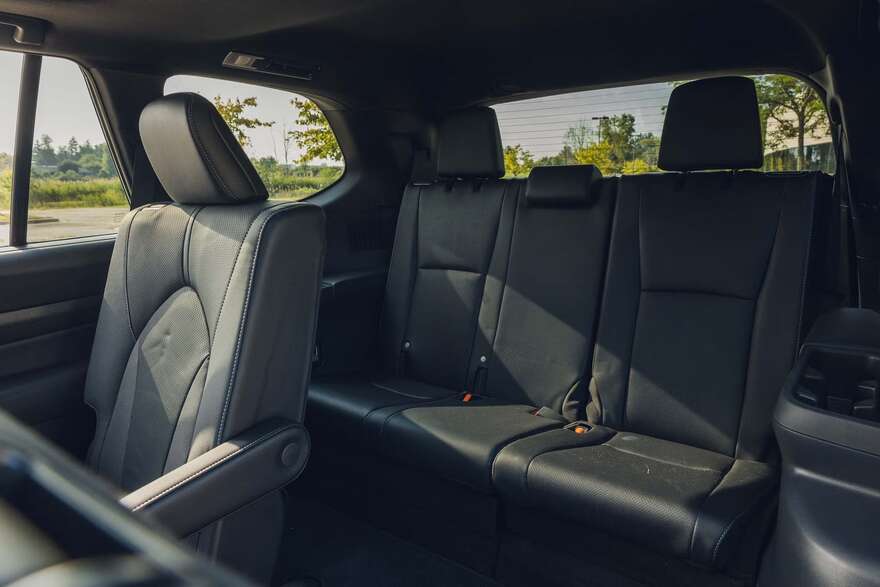
For years there was a hole in Toyota's family lineup. The regular Highlander is a great SUV with a third row that's honest only if your passengers are under twelve. The Sienna is brilliant and, for some buyers, socially impossible (see above). The Sequoia is a full-size truck-frame commitment. So for 2024, Toyota built the bridge: the Grand Highlander — longer, wider, and taller than a Highlander, with a third row that offers 33.5 inches of legroom, nearly six inches more than its little brother. That's a row real adults can ride in without negotiating.
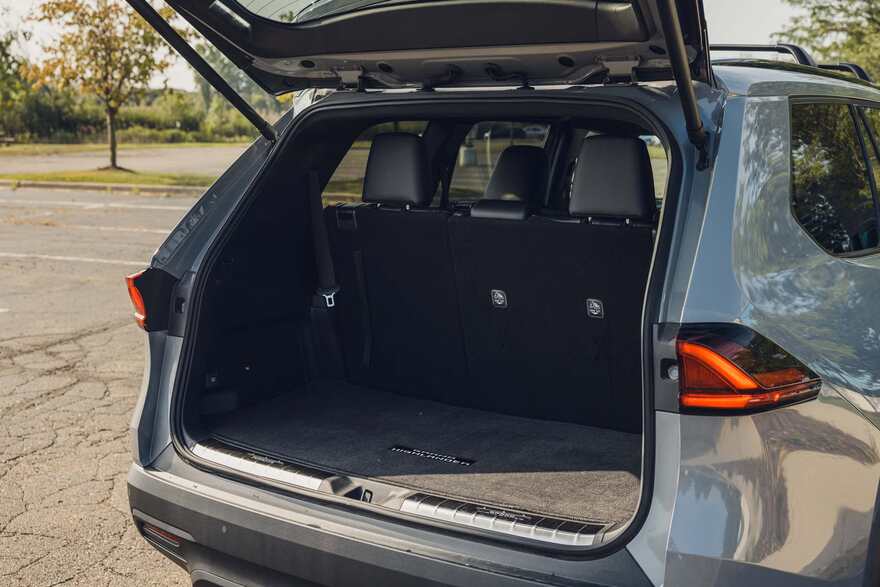
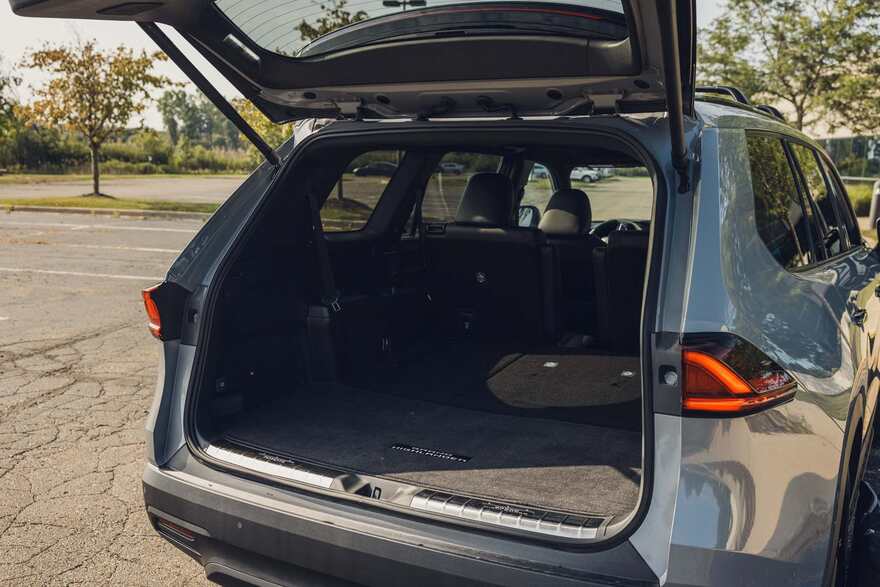
The numbers behind the mission: 20.6 cubic feet of cargo space behind the third row (that's a real grocery-and-stroller trunk with all seats up), 57.9 with the third row folded, and 97.5 with everything down. Seating for up to eight. Seven USB-C ports scattered through the cabin so nobody fights over power. And yes — thirteen cupholders. Thirteen. Toyota counted your family's drink orders and then added a margin of safety. It's built in Princeton, Indiana, on the same platform that underpins its luxury cousin, the Lexus TX.
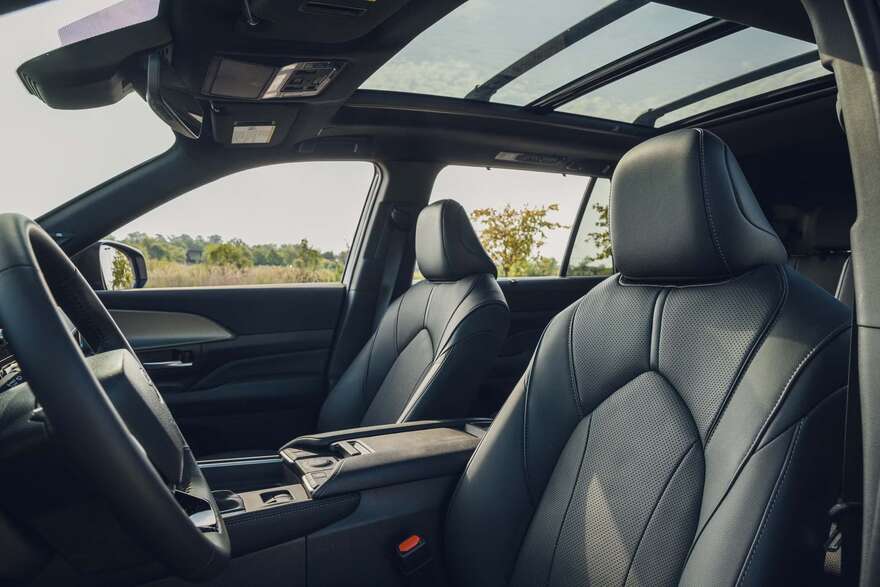
Third row, real legroom — the whole reason this thing exists.
The receipts: accolades and momentum
The critics noticed immediately: Cars.com handed the Grand Highlander its top overall honor, Best of 2024, and it was a finalist for North American Utility of the Year. But my favorite award is the one the market gave it: through the first nine months of 2025, the Grand Highlander was up roughly 80 percent year over year and outsold the regular Highlander outright. When a three-row SUV starts outselling its own famous sibling, that's not a trend. That's a verdict.
Three engines, three personalities
Here's how I translate that at the desk. The Gas engine is for buyers who want the lowest sticker and a familiar feel — it's punchy, tows the full 5,000 pounds, and asks nothing of you. The Hybrid is the one most families should default to: mid-30s fuel economy in a vehicle this size is genuinely absurd, and the drivetrain is Toyota's most proven technology. Its only real trade-off is the 3,500-pound tow rating. And the Hybrid MAX is the overachiever — 362 horsepower and 400 lb-ft means it out-muscles some V8s while still returning high-20s economy, with AWD and the full tow rating included. If you regularly merge onto I-15 with a full car, the MAX makes you grin every single time.
Every trim, decoded
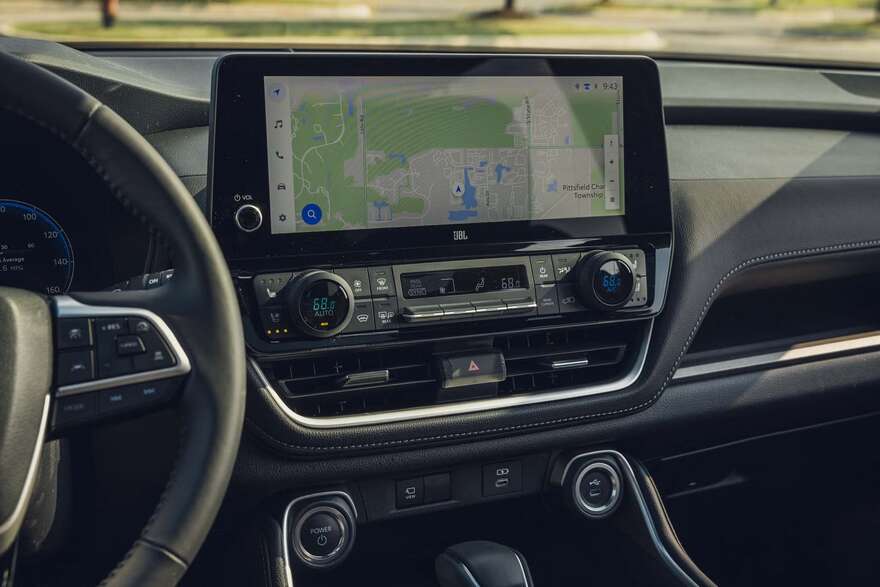
LE — the smart start. Don't let "base" fool you: every Grand Highlander, LE included, gets the 12.3-inch touchscreen with wireless Apple CarPlay and Android Auto, Toyota Safety Sense 3.0, tri-zone climate, an eight-way power driver's seat, and the eight-passenger bench. It rides on 18-inch wheels — which, pro tip, also means the cheapest tires and the softest ride. Get it if: you want maximum family per dollar.
XLE — the crowd favorite. Adds SofTex-trimmed heated front seats, a power liftgate, wireless phone charging, roof rails, 20-inch wheels, and the small daily luxuries that make ownership feel finished. Still seats eight. Get it if: you want one comfortable step up without leaving the value zone — this is the volume seller for a reason.
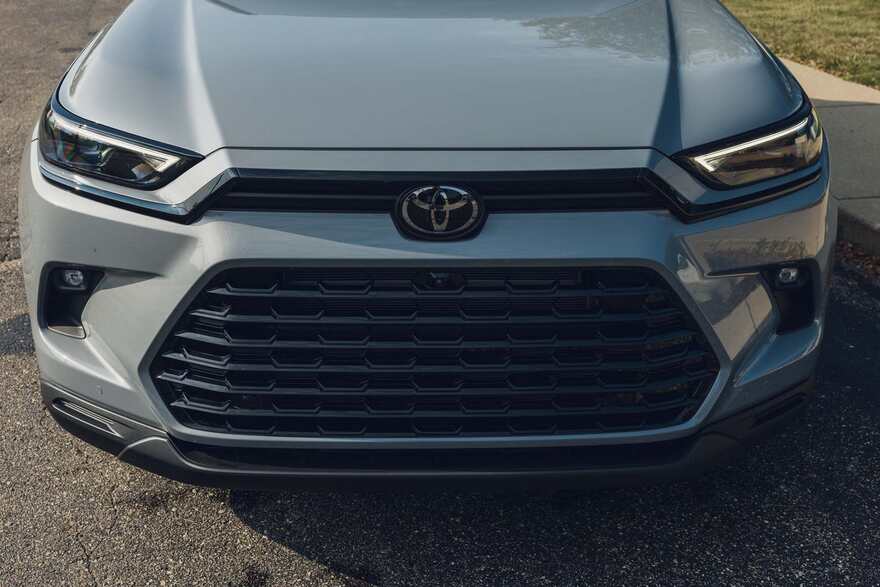
Hybrid Nightshade — the style play. Hybrid-only and dressed for the occasion: 20-inch black alloys, blacked-out grille, mirror caps, door handles, roof rails, and shark-fin antenna, with black seating and matte-gray metallic door trim inside. Same efficiency, double the presence. Get it if: the school pickup line is a runway and you know it.
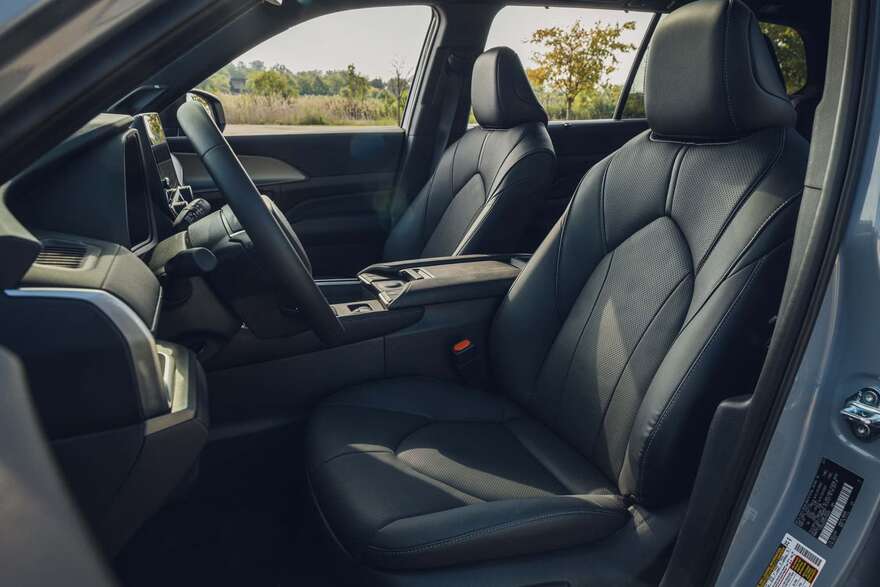
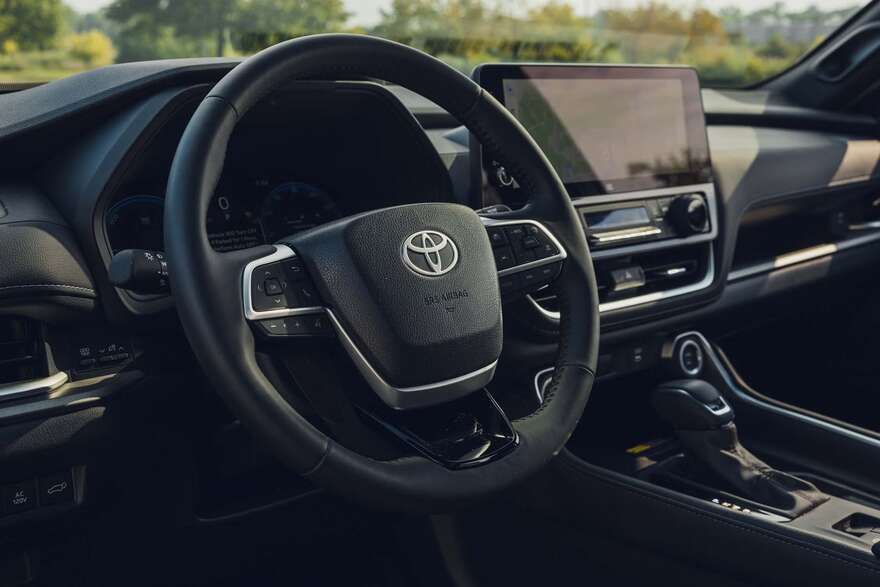
Limited — the sweet spot. This is where it starts feeling like the Lexus cousin: leather-trimmed, heated and ventilated front seats, heated second-row captain's chairs (a bench is available if you need eight), an 11-speaker JBL system, LED fog lights, a foot-activated height-adjustable liftgate, the full 12.3-inch digital gauge cluster, and two 120V household outlets. You can also option the 360-degree camera and digital rearview mirror here. Get it if: you want 90 percent of the Platinum experience at just under $49K — this is my default recommendation, and the one I put my own family members in.
Platinum — the flagship. Everything above, plus the panoramic tilt/slide moonroof, a 10-inch head-up display, the digital rearview mirror and Panoramic View Monitor as standard, and available Traffic Jam Assist that handles steering, braking, and acceleration in sub-25-mph crawl. Get it if: you drive a lot of miles, love technology, or simply refuse to wonder "what if."
One structural note that simplifies everything: the Hybrid is available across LE, XLE, Nightshade, and Limited, while the Hybrid MAX is reserved for Limited and Platinum. So if you want maximum power, you're shopping the top two trims by definition.
The matchmaking cheat sheet
Packages and the options sheet
Here's a refreshing thing about the Grand Highlander: Toyota kept the option maze small on purpose. Instead of burying you in packages, the big decisions are structural — which engine, which trim, front- or all-wheel drive (AWD is standard with the MAX), and on Limited, captain's chairs or the eight-seat bench. The meaningful add-ons live mid-lineup: Limited buyers can option the Panoramic View Monitor and digital rearview mirror that come standard on Platinum. Beyond that, it's the accessory catalog — tow hitch, crossbars, all-weather liners, cargo organizers — rather than thousand-dollar mystery bundles. Fewer checkboxes, fewer regrets.
Colors, inside and out
The exterior palette runs from crowd-pleasers to personality picks: Wind Chill Pearl and Ice Cap on the white end, Celestial Silver and Heavy Metal in the grays, Midnight Black for the classic look, Blueprint for the best blue in Toyota's deck, Ruby Flare Pearl if you want to be found in a parking lot, and the soft, silvery-blue Moon Dust that photographs beautifully at dusk. The Nightshade keeps its own menu monochrome — black, white pearl, silver — so the blackout trim does all the talking. Inside, it's Graphite black or light Boulder gray in the lower trims, warm Macadamia leather arriving at Limited, and Platinum's rich Portobello brown for the full executive-lounge effect. My matchmaking take: Blueprint over Macadamia is the combination people compliment at gas stations.
Living with it
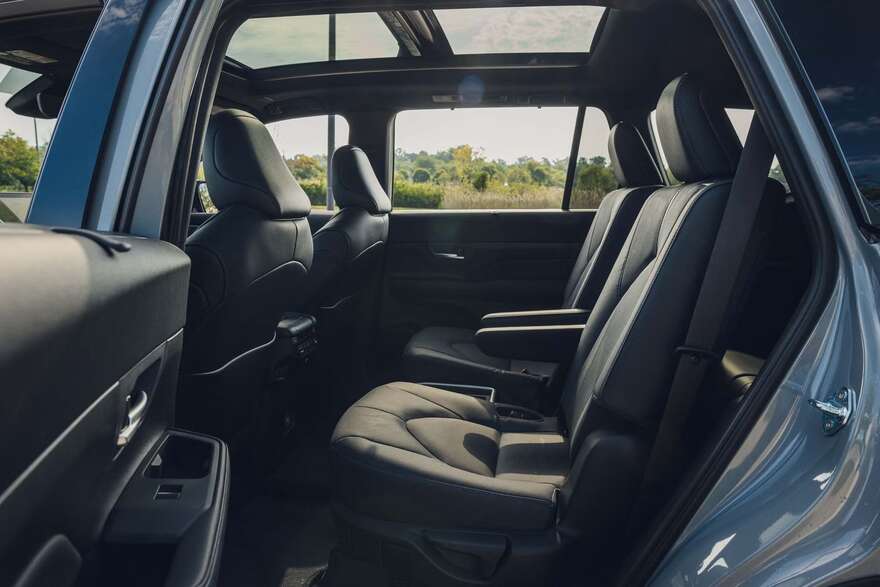
The spec sheet says family hauler; the details say Toyota actually rode in the back. The second row slides and reclines. The third row has its own USB-C ports and cupholders, so the way-back isn't a punishment. The hybrid's regenerative braking makes stop-and-go school runs weirdly serene. Fold everything flat and you're moving a dorm room. And because it's a Toyota, the ownership math — the resale, the reliability record, the hybrid battery warranty that runs ten years or 150,000 miles — quietly does more for your wallet than any discount could.
Thirteen cupholders. Toyota counted your family's drink orders and added a safety margin.
So no — you don't have to get the van. You don't even have to apologize for not getting the van. The Grand Highlander exists precisely for the family that needs three real rows, a week's worth of cargo, and a vehicle they're excited to see in the driveway. Pick your engine, pick your trim, argue about Blueprint versus Nightshade on the drive over, and I'll handle the rest.
P.S. — you've technically already met this SUV: it's the one parked across my home page. That wasn't an accident.